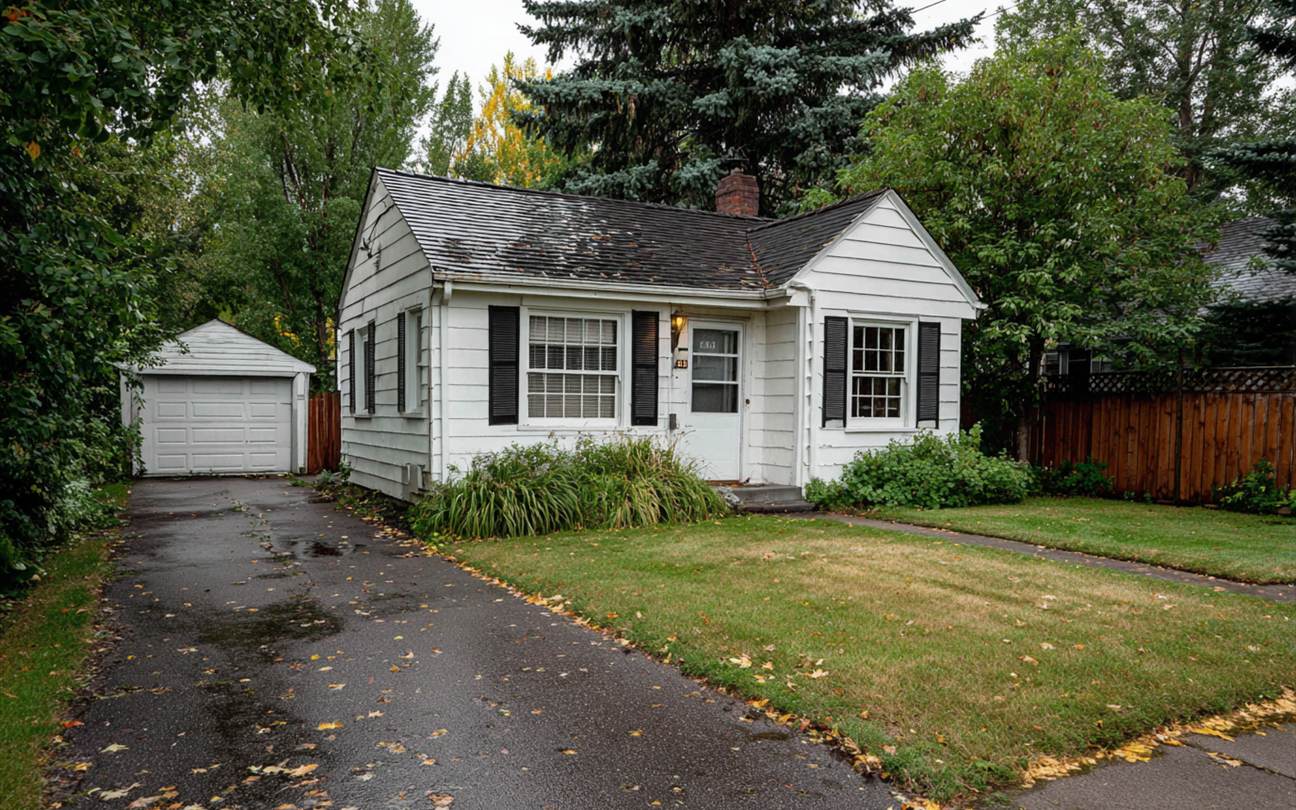
Bottom line: the damage in an empty house isn't worse because the leak is bigger; it's worse because nobody is there to stop it. Around Bremerton, houses sit empty for all kinds of reasons. Families move on orders. Owners deploy. Rentals turn over. Houses go on the market. A split supply line or a failed water heater gets caught in minutes when someone's home. In an empty house it can run for days and reach every floor.
Why Empty Houses Flood Worse
- Nobody hears it. A running line or a dripping tank goes unnoticed.
- Heat gets turned down, sometimes too far, and pipes in outside walls and crawlspaces freeze.
- Small problems grow. A slow toilet leak becomes a soft subfloor and a stained ceiling.
- Storms hit unchecked. A gutter overflows or a window leaks for weeks.
Before You Leave
| Step | Why |
|---|---|
| Find and test the main shutoff | So you or a helper can close it fast |
| Decide: water off or on | Off at the main is safest for a long absence; leave it on only if someone checks often |
| Set the heat no lower than the mid-50s | Keeps pipes in walls and crawlspaces from freezing |
| Turn off or set the water heater to vacation | Less risk and less waste |
| Disconnect hoses from outside faucets | Prevents freeze splits behind the bib |
| Clear gutters and check downspouts | Keeps rain away from the foundation |
| Leave a key and instructions with someone local | So a problem gets handled while you're away |
Check-Ins
A regular check-in is the single best protection. Weekly is a good rhythm, plus after any hard freeze or big storm. The person checking should:
- Walk every floor, including the basement or crawlspace hatch.
- Look at ceilings under bathrooms and around the water heater.
- Listen for running water with everything off.
- Check the water meter. If it moves with every tap closed, something is leaking.
- Note anything unusual and send photos.
If You're Far Away
When the owner is deployed or stationed elsewhere, a local contact makes the difference. Give them the main shutoff location, a key and a phone number they can call. If water is found:
- They shut off the main and cut power to wet areas.
- They take photos before anything is moved.
- They let a restoration company in.
- You report it to your insurer, keep the claim number, and ask the company for photos and readings at each visit.
Between Tenants
For landlords, the gap between leases is a good time to look for small leaks: under sinks, around toilets, at the water heater. A slow leak found during turnover is far cheaper than one found after the new tenant moves in.
Insurance and Vacancy
Some homeowners and landlord policies limit coverage when a house has been vacant for an extended period. Read your policy, and ask your agent what counts as vacant and what you need to do.
Smart Devices That Help
Inexpensive water alarms placed under sinks, next to the water heater and by the washer beep when they get wet, which only helps if someone hears them. Connected versions send an alert to your phone wherever you are. Some homes add an automatic shutoff valve that closes the main when a sensor detects water. None of these replace check-ins, but for an owner stationed far away, a phone alert can turn a week-long leak into a one-hour problem.
A Simple Checklist to Leave Behind
Tape a short note inside a kitchen cabinet for whoever checks the house: where the main shutoff is, where the breaker panel is, who to call, and your contact details. In an emergency, nobody wants to search for a valve.
The First Day Back
When you or a new tenant walk in after a long absence, do the same walk the checker would: every floor, the water heater, ceilings under bathrooms, and the meter.
Water Heater on Vacation
Most tank heaters have a vacation setting. Use it for a long absence, or shut the heater off completely if the water main is off too.
Questions
How long can I leave a house empty in winter?
There's no fixed limit, but the longer it's empty, the more it matters that the water is off or someone checks often. Read your policy's vacancy terms too.
Should I drain the pipes?
For a long winter absence, many owners shut the main and open the lowest faucet to drain the lines. Ask whoever handles your plumbing if you have a well, a boiler or anything unusual.
What if I find water and the house has been empty for weeks?
Shut off the main, photograph everything, and call. Expect more removal and longer drying, because the water had time to spread.
Around the Peninsula
Empty houses are common in Rocky Point, West Bremerton, Gorst and Keyport. The full page: rental and vacant homes.
Ready.gov: winter weather preparation
Owner, Landlord, Tenant: Who Handles a Leak in a Kitsap Rental
The usual roles, in plain terms.
Hood Canal and Lake Cabins: Checking a Seasonal Place After a Storm
A walk-through for the first visit after bad weather.