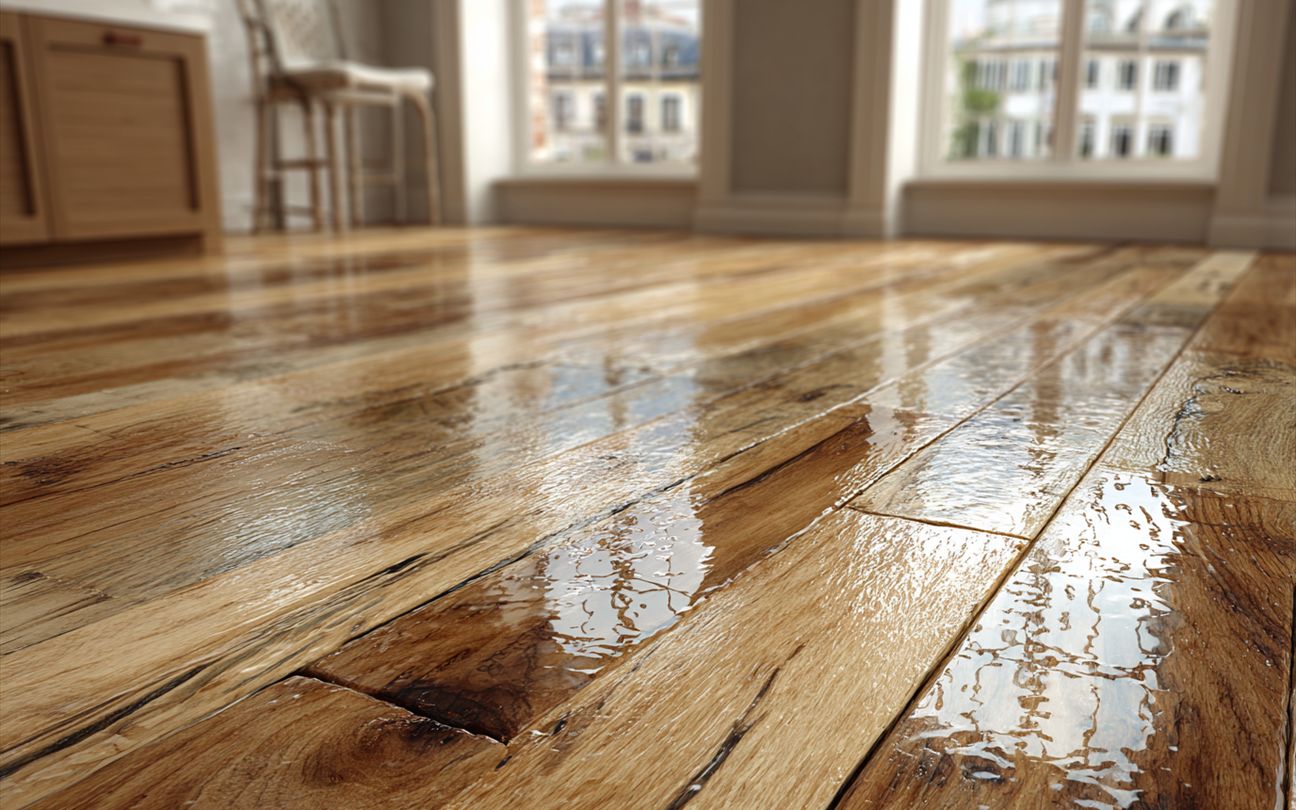
Floor and Carpet Water Damage
Bottom line: what you can see on the surface is the smallest part of a wet floor. Water runs under flooring, into the subfloor, and in many Kitsap homes down into a crawlspace or onto a basement slab. The flooring material decides how fast it shows and what can be saved. The subfloor decides whether the floor ever feels right again. A company should check below the floor as well as across it.
By Material
| Flooring | Reaction to water | Typical outcome |
|---|---|---|
| Solid hardwood | Boards absorb water and cup, with edges higher than centers | Mild cupping can be dried in place with mats and dehumidifiers; buckled boards get replaced |
| Engineered wood | The thin top layer can delaminate | Often replaced in the wet area |
| Laminate | The fiberboard core swells at the seams | Swollen boards rarely recover; replaced after the subfloor dries |
| Vinyl plank | Planks shrug off water, but it sits underneath | Planks lifted so the subfloor can dry; some reused |
| Carpet | Carpet and pad soak it up | Pad replaced; carpet often saved if the water was clean and it was quick |
| Tile | Tile is fine; grout and underlayment can stay wet | Usually dried in place |
Old Fir and Oak Floors
Many older Bremerton houses still have their original wood floors, and they're worth saving when the water is caught early. Old-growth fir and oak strip floors from the shipyard years are often thicker than modern boards and can come back after careful drying. Drying mats pull water up through the boards while dehumidifiers run, and the floor is given time to settle before anyone talks about sanding. Sanding a cupped floor before it's dry is the classic mistake: the boards crown later as the bottoms dry out.
The Subfloor, and What's Below It
The flooring sits on a subfloor, plywood in older homes, often OSB in newer ones, over joists. Plywood usually dries; OSB swells at the edges and sometimes has to be replaced. Below that is either a crawlspace, a basement, or a slab. A leak under a kitchen floor can drip into a crawlspace and soak the insulation there, so the company should look underneath. On a slab, the concrete has to read dry before new flooring goes down, or the new floor gets wet from below.
Dry in Place or Pull It Up?
The decision depends on the material, the water and the time. Clean water caught within a day on hardwood or carpet often dries in place. Laminate, wet particleboard underlayment and anything soaked by dirty water usually comes up. A good company explains its choice with readings, not habit. More: dry it in place or tear it out.
Under Cabinets and Appliances
Kitchen leaks hide under cabinet bases and appliances, where nobody looks. Particleboard cabinet floors swell and crumble, and water sits under the toe kick for days. Companies often pull the toe kicks to get air underneath, and move the fridge and range to check the flooring around them. Ask how the plan covers the space under cabinets, not only the open floor.
Before the Company Arrives
- Stop the source at the fixture valve or the main.
- Move furniture off the wet floor, or slip foil or plastic under the legs.
- Pick up rugs and anything that might bleed dye.
- Don't heat a wet wood floor with space heaters; uneven drying makes cupping worse.
- Don't pull up flooring to look. Meters can tell what's under it.
- Photograph the floor and the source.
Floors on Lower Levels
On a daylight lower floor or in a finished basement, the floor sits on concrete, and concrete changes the plan. Carpet over pad on a slab, laminate over foam, or vinyl plank glued down all trap water against concrete that dries slowly. In Bremerton's hillside houses, these lower floors are also the ones most likely to take ground water in a long wet spell. Expect the flooring to come up so the slab can be dried and tested, and expect the slab to need more time than the walls around it.
Stairs and Landings
Carpeted stairs between floors catch water running from a bathroom or laundry upstairs. Each tread has its own pad, and the stringers underneath can stay wet. Stairs are slow and awkward to dry, so the carpet on the affected treads usually comes up.
Area Rugs and Runners
Wool rugs, runners and heirloom pieces are often worth more than the floor under them. Lift them off the wet floor as soon as you can, roll them loosely and set them somewhere dry. Many can be cleaned and dried off-site. Note which rugs were wet and for how long; it matters for the cleaning and for the insurer.
Matching Floors Later
If there's leftover flooring from the original install in the garage or attic, mention it. Matching a discontinued laminate or a stained hardwood can decide whether one room or three get new floors.
Putting the Room Back
When the new floor goes down, give it a few days before moving heavy furniture back, and use felt pads under legs. Keep the house heated normally through the first winter so the new wood or laminate settles evenly with the rest of the floor.
Will Cupped Hardwood Flatten Again?
Often, if it was caught quickly and dried slowly and evenly. Boards that buckled off the subfloor usually don't. Wait for the readings before deciding on sanding or replacement.
Why Does My Floor Smell Damp If It Looks Fine?
The water may be under the flooring or in the crawlspace below. A meter reading on the subfloor, and a look underneath, will tell. Catching it early keeps the job small.
Floor Calls Around the Peninsula
The Narrows and Sinclair Inlet
- Downtown BremertonSinclair Inlet
- ManetteThe Narrows
- West BremertonSinclair Inlet
- Navy Yard CitySinclair Inlet
- Port OrchardSinclair Inlet
- GorstSinclair Inlet
Dyes Inlet
- Sheridan ParkThe Narrows
- Rocky PointDyes Inlet
- Kitsap LakeDyes Inlet
- IllaheeDyes Inlet
- SilverdaleDyes Inlet
- TracytonDyes Inlet
- ChicoDyes Inlet
The Sound side: Manchester
Liberty Bay
Hood Canal
How the drying is measured: what the moisture numbers mean.