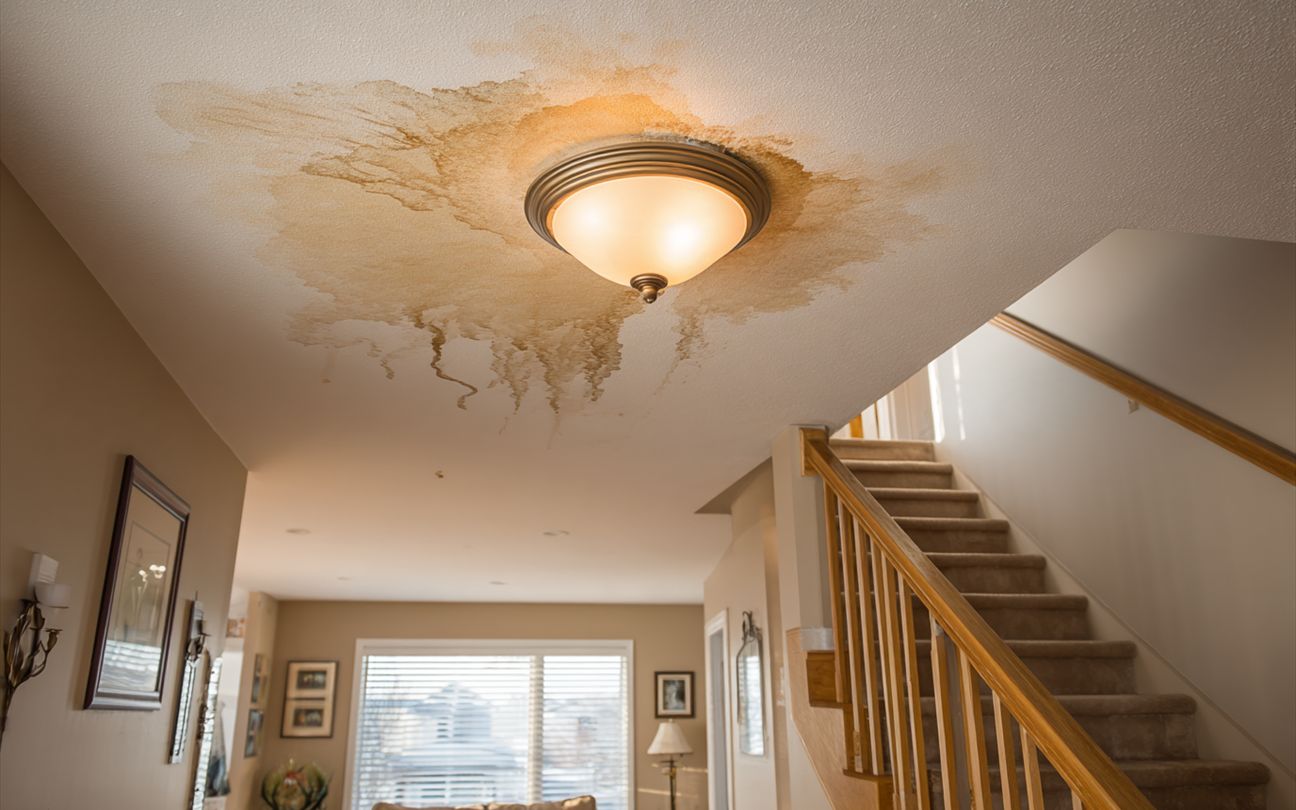
Water Leaking From the Ceiling or Inside a Wall
Bottom line: a ceiling or wall stain is the last place the water shows up, not the first place it went. By the time drywall changes color, water has already soaked insulation, run along a joist or a stud, and wet the framing around it. In Bremerton houses, it usually comes from one of two directions: from above, out of a bathroom, laundry or a roof; or from the side, driven through a window or siding by wind off the water. Finding which one is the first job.
Leaks From Above
- Bathrooms. A toilet's wax seal, a tub drain gasket, a cracked shower pan or a supply line can drip into the ceiling below for weeks. The stain often grows after showers or with every flush.
- Laundry rooms. A washer hose that bursts upstairs can put gallons a minute through the floor.
- Roofs. Older roofs with moss and aging flashing let water into the attic during long rains. That's roof repair, separate from the water damage inside.
- Condensation. In cold weather, warm moist air can condense in an attic and drip onto the ceiling near outside walls.
A bellied ceiling is a water balloon waiting to drop. Clear the room under it, kill the circuit for any fixture in it, and set a bucket under the drip.
Wind-Driven Rain
On the inlets, storms push rain sideways, and older windows and siding let some of it in. When a southerly storm blows across Sinclair Inlet or Dyes Inlet, rain hits walls hard enough to get past worn caulk, old window frames, flashing and lap siding. The signs show up on the inside: a wet sill, swollen trim, paint bubbling below a window, a damp spot high on an outside wall. More: wind-driven rain at windows and siding.
Water Inside the Wall
A wall is a cavity between two sheets of drywall, with studs, a bottom plate and often insulation inside. Once water is in there, it's trapped. It wicks up the drywall, soaks the bottom plate and stays held against the studs by wet insulation. Signs: paint that bubbles, drywall that's soft at the bottom, baseboard pulling away, a damp smell along one wall. Moisture meters and sometimes a thermal camera map how far it goes before anything is opened.
Opening and Drying
Soaked board overhead nearly always gets cut out; soaked board in a wall gets a closer look first. Overhead, the crew squares off the wet patch, drops the batts and blows the joist bay dry with a dehumidifier running. On a wall, if the water was clean and found quickly, holes drilled behind the baseboard can be enough to vent the cavity; otherwise the bottom foot or two comes off. No patch goes up until the studs and joists test dry.
Damage Repair Versus Fixing the Source
The restoration company handles the water damage: the ceiling, walls, insulation, framing, drying and rebuild. The source, whether a toilet seal, a shower pan, a roof flashing or a window, is separate repair work. Some restoration companies handle parts of it. Ask at the start which pieces are included so nothing is left undone.
Older Plaster Ceilings
Plenty of yard-era houses kept their plaster and lath overhead, and it reacts to a soaking in its own way. Plaster tolerates a short wetting better than drywall, but the wood lath behind it soaks up water, and wet plaster can lose its grip on the lath and come down in heavy sheets. A bulge or a crack that wasn't there before means keep clear. Repairs may mean patching plaster or replacing a section with drywall; a company should explain which before starting.
The Attic Above
A ceiling stain on the top floor often starts in the attic, not a bathroom. In older Bremerton houses, attics take water from aging roofs, moss-lifted shingles, cracked vent boots and chimneys whose flashing has worked loose. Insulation in the attic soaks it up first and hides it, so by the time the ceiling stains, the insulation above may be heavy and matted. Once the roof is fixed by whoever handles that work, the restoration side pulls the wet insulation, dries the ceiling joists and the drywall, and puts new insulation back.
Laundry Rooms Upstairs
A washer upstairs is convenient until a hose bursts. A failed hose can put water into the floor faster than any bathroom leak, and it shows up in the ceiling below within minutes. Braided steel hoses, a drain pan under the machine and turning off the supply valves before a long trip all help.
Photograph the Stain Over Time
Take a picture of a new stain with a tape measure beside it, then again a day or two later from the same spot. A stain that's growing shows up plainly side by side, and the photos help both the company and the insurer.
Light Fixtures and Fans in a Wet Ceiling
Recessed lights, fan housings and ceiling boxes are the low points water finds first, which is why so many ceiling leaks start as a drip at a light. Turn that circuit off at the panel and leave the fixture alone until the ceiling is dry and the wiring has been checked. A fan that hums or flickers after a leak needs looking at before it's used again.
Why Is the Stain So Far From the Bathroom?
Joists, pipes and the back of the board act like gutters inside a ceiling. The drip lands wherever the path dips or a seam opens, sometimes a full room away. Trust the meter over the mark.
Can the Stain Just Be Painted?
Once the drip is fixed and the board tests dry, a coat of stain-blocking primer under the paint does it. Soft or bellied board gets replaced instead.
Ceiling and Wall Calls Around the Peninsula
The Narrows and Sinclair Inlet
- Downtown BremertonSinclair Inlet
- ManetteThe Narrows
- West BremertonSinclair Inlet
- Navy Yard CitySinclair Inlet
- Port OrchardSinclair Inlet
- GorstSinclair Inlet
Dyes Inlet
- Sheridan ParkThe Narrows
- Rocky PointDyes Inlet
- Kitsap LakeDyes Inlet
- IllaheeDyes Inlet
- SilverdaleDyes Inlet
- TracytonDyes Inlet
- ChicoDyes Inlet
The Sound side: Manchester
Liberty Bay
Hood Canal
If a tenant reported it: rental and vacant homes.