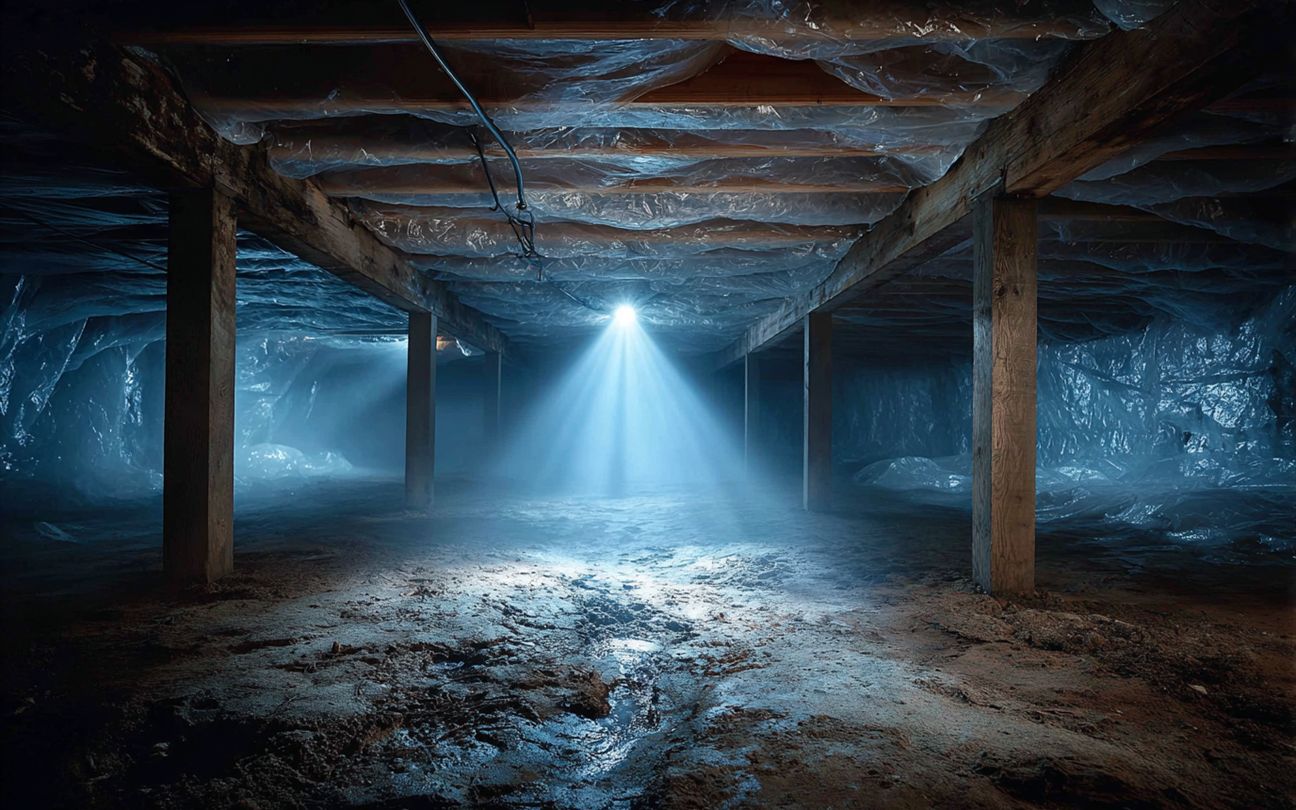
Bottom line: a crawlspace can be wet for months while the rooms above look fine. Many houses on the Kitsap Peninsula sit over a vented crawlspace: a short space between the ground and the floor, closed in by the foundation walls, with vents to let air through. In a climate with close to 57 inches of rain a year, that space is fighting moisture from the ground, from the air and from any leak above it.
The Parts of a Crawlspace
| Part | What it does | What goes wrong |
|---|---|---|
| Vapor barrier (plastic on the ground) | Keeps ground moisture out of the air | Torn, shifted or missing; water pools on top |
| Foundation vents | Let air move through | Blocked by soil, plants or storage; or let in damp winter air |
| Floor insulation | Keeps the floor warm | Soaks up water, sags and falls |
| Joists and subfloor | Hold up the house | Stay damp when insulation is wet |
| Ducts and pipes | Carry heat and water | Ducts fill with water; pipes freeze near vents |
Where the Water Comes From
- Ground water rising on low lots and near the shore in long wet spells
- Runoff from slopes and downspouts emptying at the foundation
- Plumbing leaks from supply lines, drains or the water heater
- Condensation when damp outside air meets cold surfaces
Signs From Above
You usually notice a wet crawlspace from the rooms above it:
- Floors that feel cold and clammy
- A musty smell that's strongest near floor vents or closets
- Condensation on windows that's worse than usual
- Floors that feel soft or bouncy in one area
- Higher humidity readings on a household gauge
Look from the hatch with a flashlight. Standing water, a sagging vapor barrier holding water, or insulation hanging down all mean it needs attention.
How a Wet Crawlspace Gets Dried
- Find the source, or at least whether it's ground water or a leak.
- Pump out standing water.
- Remove wet insulation; it rarely dries well in place.
- Pull or replace a torn vapor barrier that's holding water.
- Dry the space with dehumidifiers and air movers set up under the house.
- Check the joists and subfloor with a meter until they read dry.
- Reinstall insulation and a sound vapor barrier.
If the water came from outside, mud and debris come out before drying.
Vents in Winter
Crawlspace vents were designed to let moisture out, but in a Kitsap winter, the outside air is often damp and cold. Some owners close vents that can be closed during freezes to protect pipes. Whether to keep vents open year-round, or to seal and condition the crawlspace instead, is a question for whoever works on your home's building envelope. The restoration company dries what's wet today.
Pipes and Ducts Under the Floor
Water lines in a crawlspace are the ones most likely to freeze, especially near vents on the north and east sides. Heating ducts run through many crawlspaces too, and a duct lying in standing water can fill up or come apart at the seams, sending damp air into every room. When a company dries a crawlspace, ask it to check the ducts and the pipe runs as well as the ground and the insulation.
Getting In Safely
Crawlspaces are tight, dark and sometimes wet. Look from the hatch with a strong flashlight before going in, never go in if water may be touching wiring, and leave the full inspection to someone with the right gear.
After the Work
Once the crawlspace is dry and the insulation and vapor barrier are back, check it again after the first big storm. If water returns, the source is outside, and the drainage or grading needs attention from whoever handles that work. A dry crawlspace through one full winter is the real test.
Access Hatches
A crawlspace hatch hidden under a rug, behind a closet shelf or buried in a flower bed makes every check harder. Know where yours is and keep it clear, so a quick look after a storm takes a minute instead of an afternoon.
Questions
Is a little moisture in the crawlspace normal?
Some dampness is common, especially near the shore. Standing water, wet insulation or a dripping vapor barrier isn't.
Why does the house smell musty only in winter?
Winter is when the ground is wettest and the crawlspace air is dampest. That air rises into the house.
Can I just put a fan down there?
A fan alone moves damp air around. Proper drying uses dehumidifiers and checks the wood with a meter.
Under the Floors
Crawlspaces collect water in Navy Yard City, Tracyton, Keyport and Seabeck. If the floor above has been affected, see floor and carpet water damage.
EPA indoor air basics for homeowners
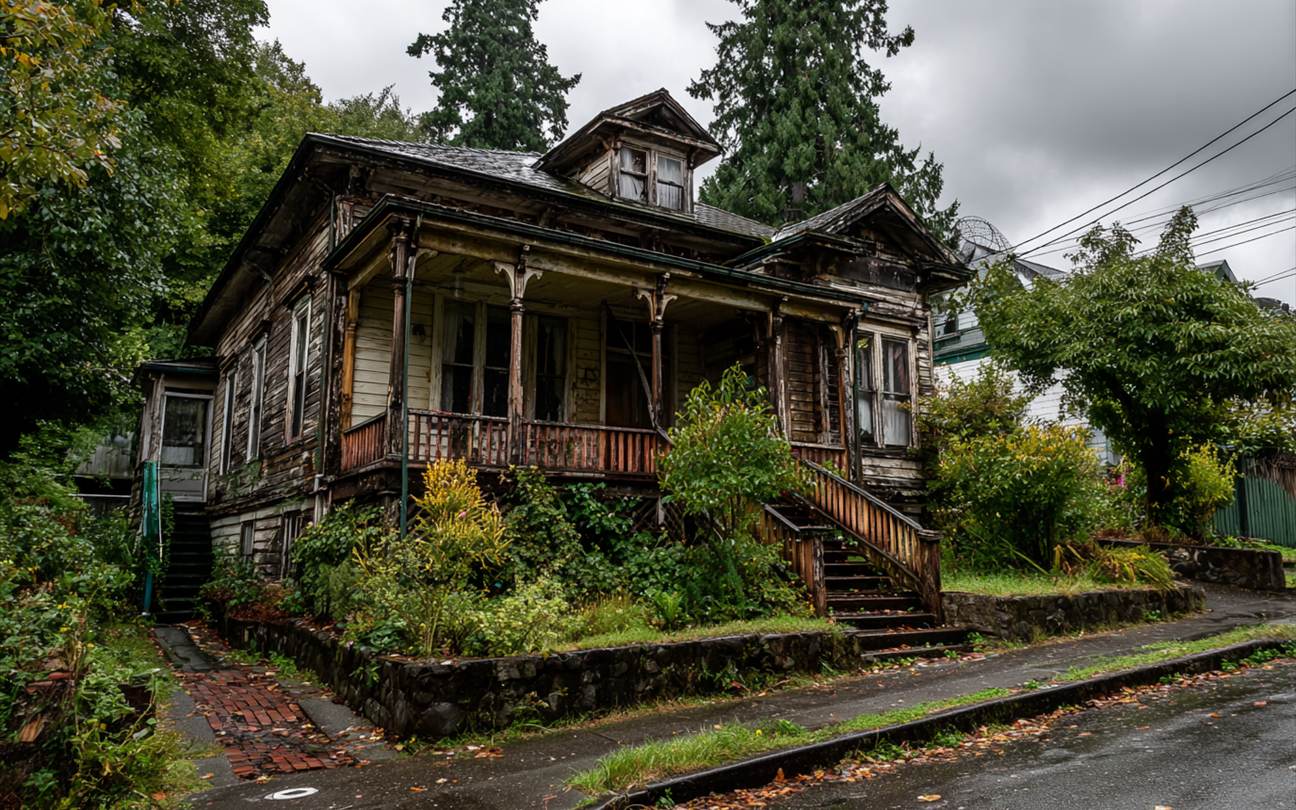
Downspouts and Yard Drainage on Kitsap's Slopes
Where rain goes once it leaves the roof.
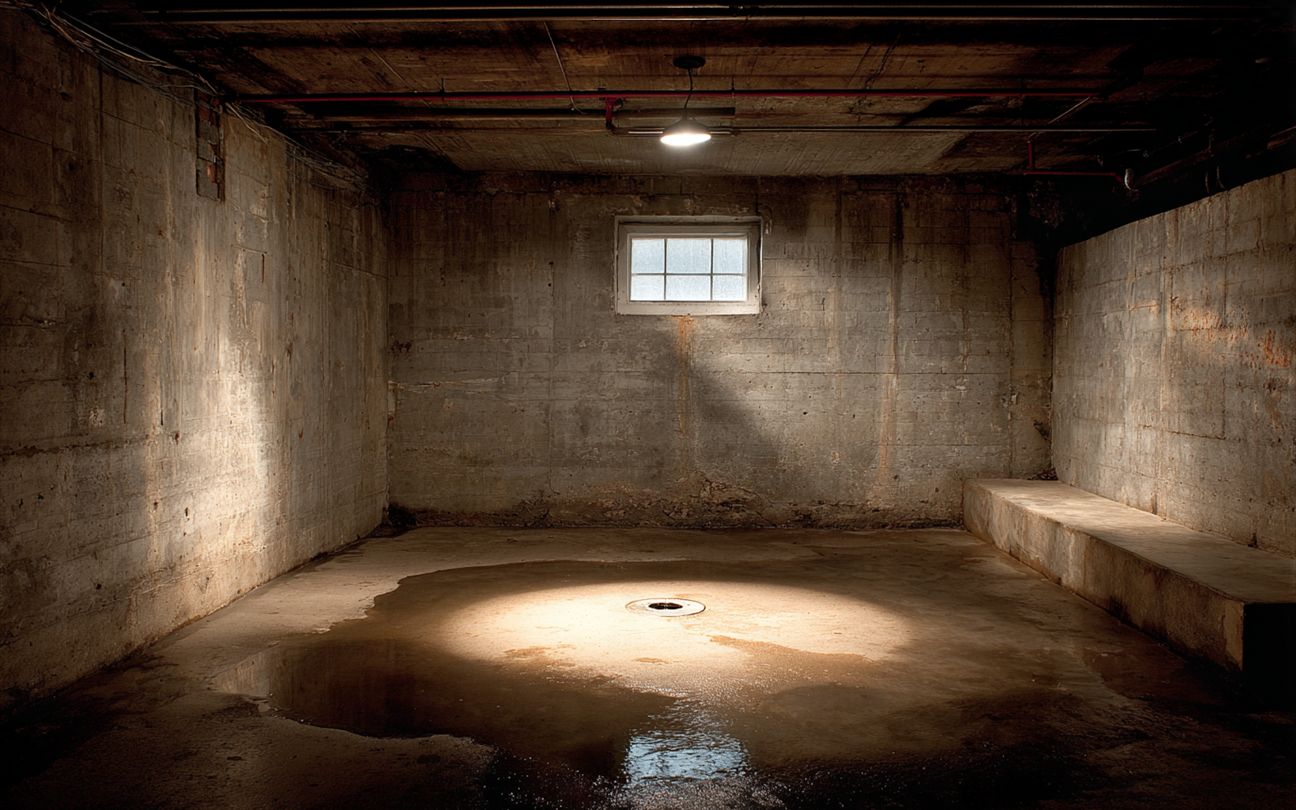
What the Moisture Numbers Mean
Reading a drying log without a background in it.