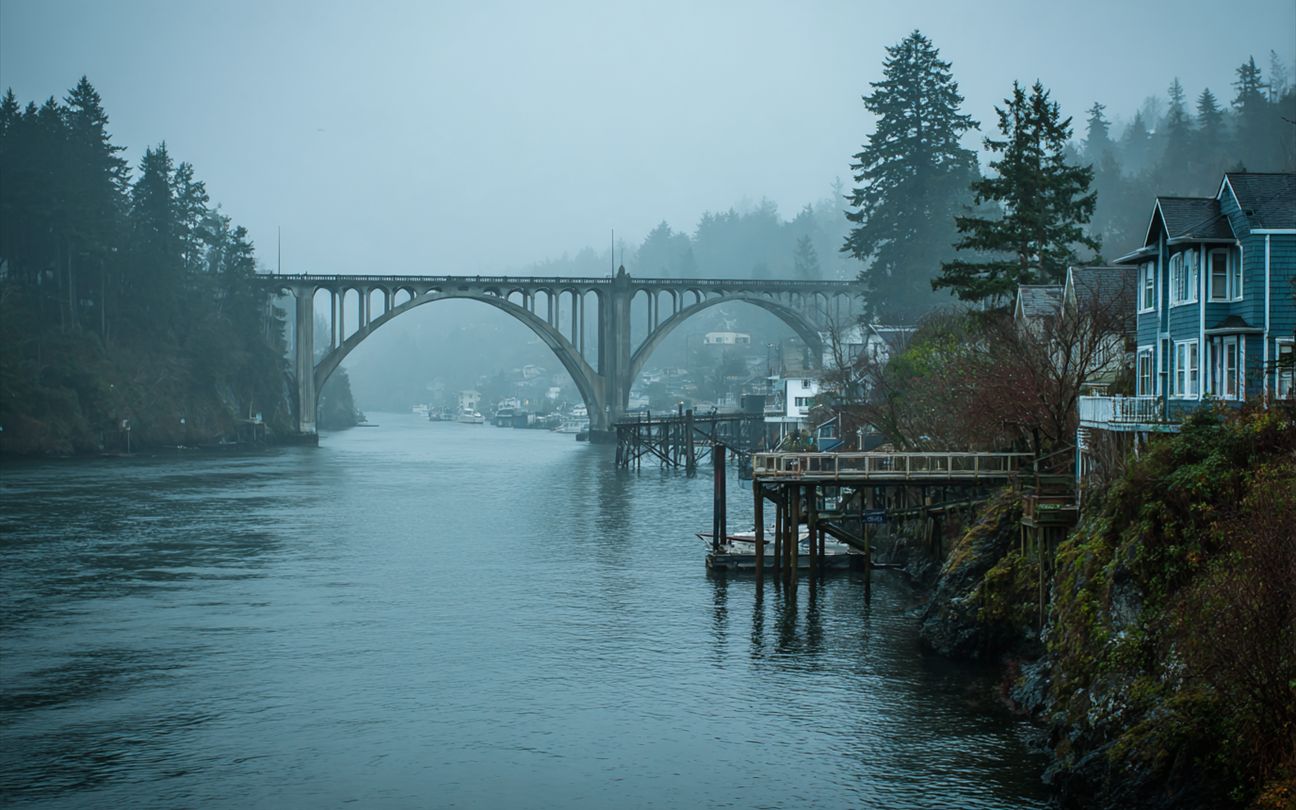
Bottom line: a house near salt water gets wet from the sky, the ground and the wind, often all in the same week. Bremerton is built around water. Sinclair Inlet runs along the south side past the shipyard to Gorst. The Port Washington Narrows cuts through the middle of the city, crossed by the Manette and Warren Avenue bridges. Dyes Inlet opens to the northwest toward Silverdale and Chico. A lot of the peninsula's houses sit on banks and low lots facing one of these, and that shapes how water damage happens.
Three Ways Water Arrives
| Way | What it does | Where it shows inside |
|---|---|---|
| Rain from above | Close to 57 inches a year in Bremerton, most of it October to March | Ceilings under aging roofs, attics |
| Water in the ground | Shoreline and low lots sit near the water table; slopes send runoff downhill | Basements, daylight lower floors, crawlspaces |
| Wind-driven rain | Storms crossing open water push rain sideways | Sills, the bottom of water-facing walls, around doors |
The Steep Banks
Along the Narrows and parts of Sinclair Inlet, houses sit on steep banks above the water. Rain that falls uphill moves through the soil toward the house, and the uphill wall of a basement or daylight lower floor takes the brunt. Overflowing gutters and downspouts emptying at the foundation add to it. On the downhill side, the concern is water running off decks and patios and pooling against the house.
The Low Lots
On Dyes Inlet and in places like Navy Yard City, Chico and Tracyton, some lots sit low, close to the water. The ground there stays wet all winter. Crawlspaces collect standing water, vapor barriers trap it, and damp air rises into the rooms above. Nobody sees it until floors feel cold and the house smells musty.
Tides and Storms
Tides on the Sound run high in winter, and a strong storm can push water higher still along low shorelines. Most houses sit well above that, but low bulkheads, boathouses, garages and outbuildings near the water can take salt water in an unusual storm. NOAA keeps a tide station at Bremerton with predictions and observed water levels, which is worth checking before a big blow if you're right on the shore.
Salt Water Is Different
If salt water gets in, the cleanup goes further than with a supply-line leak. Salt stays in materials after they dry and keeps pulling moisture from the air, so drywall, insulation and wood that soaked in salt water usually come out rather than being dried in place. Metal fasteners and electrical parts that got wet with salt water need checking too.
What Helps
- Keep gutters clear of needles, especially on the uphill side.
- Point downspouts well away from the foundation and downhill.
- Check the crawlspace from the hatch after the first big storms each fall.
- Look at water-facing windows and doors: caulk, sills and weatherstripping.
- Keep things stored in garages and outbuildings near the shore up off the floor.
These won't stop a storm, but they keep everyday winter water away from the house.
Bulkheads and Beach Stairs
Many waterfront lots on the inlets have a bulkhead, a wall of rock, concrete or timber holding the bank back from the water, and a set of stairs or a path down to the beach. Behind the bulkhead, the soil stays saturated through the winter. Water working through it toward the house is ground water like any other, but on a narrow lot the house may be only a few yards away. Watch the downhill side of the house and the lowest floor after big storms and very high tides, and keep drains at the base of the bulkhead clear.
Decks Over the Water Side
Waterfront houses often have big decks on the water side. A deck that slopes toward the house, or that's attached without good flashing, sends rain straight into the wall below the door. If a stain shows up under a deck door after storms, that's the place to start looking.
Questions
My house is on a bank above the water. Can the Sound reach it?
Rarely. The bigger risk on a high bank is ground water and runoff moving downhill toward the house, not the tide.
Why does my lower floor only get wet in big storms?
Storms bring heavy rain and wind together. Rain saturates the slope behind the house, and wind drives water into the exposed side. Both peak in the same storms.
Do I need flood insurance near the water?
That depends on where the house sits and what your lender requires. FEMA's maps show mapped flood zones by address; an agent can explain the coverage. Standard homeowners policies generally don't cover flooding from outside.
Around the Water
Shoreline lots are part of life in Manette, Sheridan Park, Navy Yard City and Tracyton. For water in a lower floor, see basement water removal.
NOAA tide station at Bremerton Washington Ecology: shorelines and coasts

Downspouts and Yard Drainage on Kitsap's Slopes
Where rain goes once it leaves the roof.

Wind-Driven Rain at Windows and Siding
How storms off the water get past old caulk and trim.